
A Surprising Discovery That Could Change How Scientists Understand Diabetes Treatment
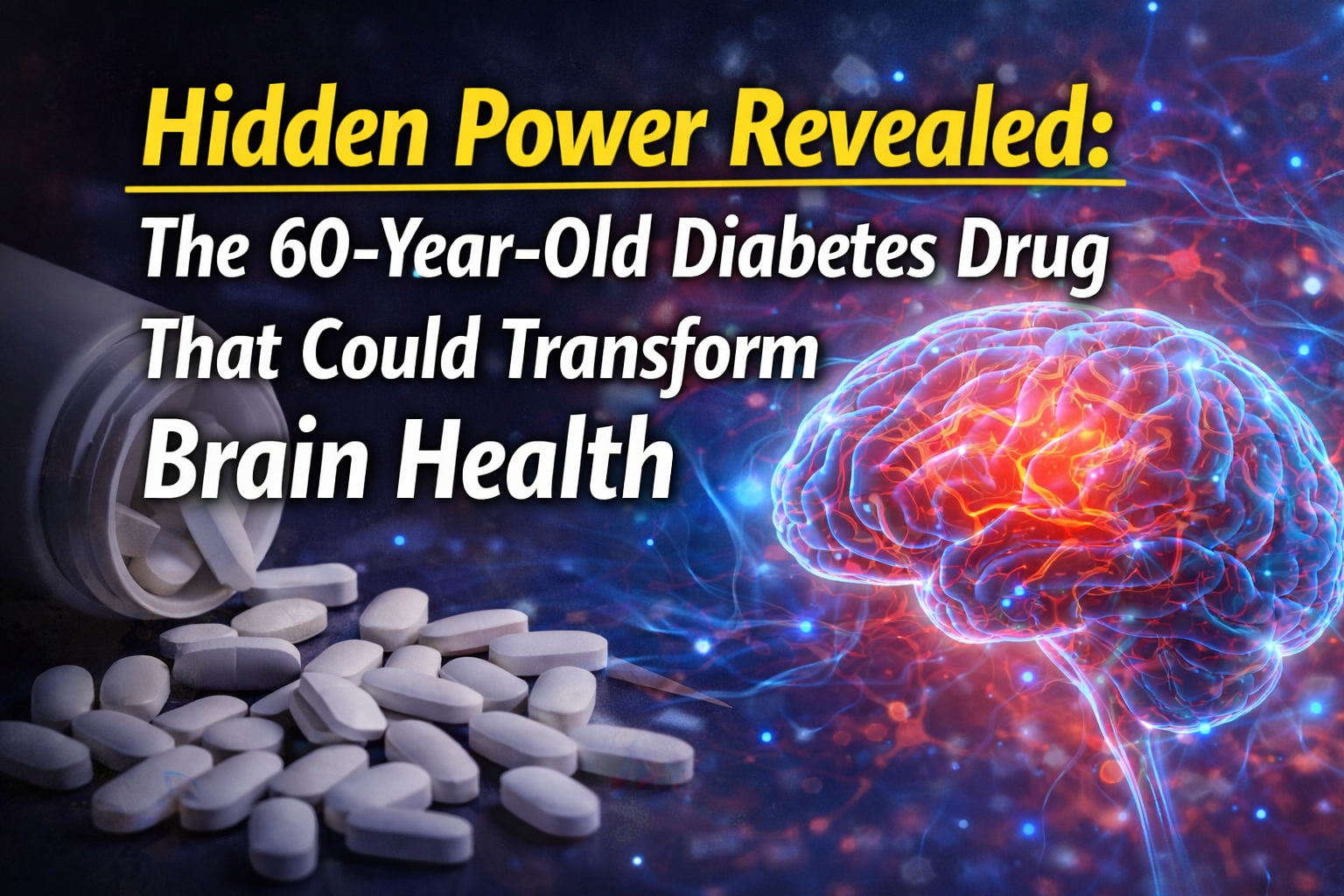
Hidden Power Revealed: The 60-Year-Old Diabetes Drug That Could Transform Brain Health: For more than six decades, doctors around the world have prescribed a common medication to manage blood sugar levels in people with Type 2 Diabetes. The drug has long been considered safe, effective, and one of the most important breakthroughs in diabetes care.

But now, researchers have uncovered a surprising twist.
Boater’s Paradise: The Jaw-Dropping Scotland Island Home With Two Deepwater Berths and Private Beach
New scientific findings suggest that this widely used medication—Metformin—may also have unexpected effects on the human brain. The discovery is generating excitement across the fields of neurology, endocrinology, and aging research.
What makes this revelation so fascinating is that scientists originally developed the drug solely to regulate blood glucose levels. Yet decades later, evidence is emerging that it may influence brain health, cognitive function, and possibly even neurodegenerative diseases.
History-Shattering Discovery: The Astonishing Kenyan Find That Could Rewrite the Origins of Humanity
Researchers are now racing to understand how this long-trusted medication might open new doors in the fight against neurological conditions such as Alzheimer’s disease and Parkinson’s disease.
The History of Metformin: A Diabetes Drug That Changed Medicine
The story of Metformin dates back more than half a century. Originally derived from a plant known as French lilac, the compound was studied for its ability to reduce high blood sugar levels.
Stunning Scientific Twist: A Forgotten Salmon Can Is Rewriting Marine History
By the late 1950s and early 1960s, researchers confirmed that the drug could effectively control glucose levels in people with Type 2 Diabetes.

Over time, metformin became one of the most widely prescribed diabetes medications in the world. Today, millions of patients rely on it daily because it:
Vision Revolution or Risky Hype? The Shocking Truth Behind the Breakthrough Eye Gel Promising Sight Without Surgery
- Lowers blood glucose levels
- Improves insulin sensitivity
- Reduces liver glucose production
- Has relatively few serious side effects
Because of its long history and strong safety profile, many physicians consider metformin the first-line treatment for Type 2 diabetes.
However, the drug’s potential benefits may extend far beyond blood sugar control.
Explosive Rise: How Czechoslovak Group Became Europe’s Surprising Defense Powerhouse
The Unexpected Brain Connection
For decades, scientists believed metformin worked primarily in the liver and muscles to regulate glucose metabolism.
But emerging research suggests something much more complex is happening.
Studies now indicate that Metformin may influence key biological pathways involved in brain function, inflammation, and cellular aging.

One pathway drawing particular attention is known as AMP-activated protein kinase, a crucial metabolic regulator that helps cells manage energy levels.
Activation of this pathway may help:
- Improve cellular repair
- Reduce inflammation
- Protect neurons from damage
- Enhance brain plasticity
These findings suggest that metformin may affect not only metabolism but also how brain cells grow, survive, and communicate.
Historic Medical Breakthrough: China’s AI Robot Successfully Performs Autonomous Brain Surgery
What Researchers Are Discovering About Brain Health
Recent studies have begun exploring whether metformin could play a role in protecting the brain from age-related decline.
Some early research suggests that the drug may influence cognitive performance and memory in certain patients.
Mind-Control Breakthrough: The Astonishing Rise of Remote-Controlled ‘Cyborg Bees’ That Could Transform Science
Scientists investigating neurological diseases are particularly interested in whether metformin might help reduce the risk or progression of conditions such as:
- Alzheimer’s disease
- Parkinson’s disease
- Age-related cognitive decline
In laboratory studies, researchers observed that metformin may promote neurogenesis, the process by which new neurons form in the brain.
This process is essential for learning, memory, and overall brain health.
If further research confirms these findings, it could represent a major breakthrough in neuroscience.
Hidden Forces Awakening: The Startling Geological Movement Scientists Are Tracking in Spain and Portugal
Could Metformin Influence Memory and Cognitive Function?
One of the most intriguing aspects of this discovery is the possibility that metformin may influence cognitive abilities.
Scientists studying brain aging have discovered that metabolic health and brain health are closely connected.
The Hidden Crypto Revolution: America’s Massive Move That Could Change Money Forever
Conditions like Type 2 Diabetes are already known to increase the risk of dementia and other neurological disorders.
Because metformin improves metabolic function, researchers are exploring whether it might also help reduce this risk.
Early observational studies suggest that some patients taking metformin may experience improved cognitive outcomes compared to untreated individuals.
However, the evidence is still evolving, and scientists emphasize that more controlled clinical trials are needed.
Cosmic Mystery Unearthed: The Astonishing Bulgarian Rock That May Reveal Humanity’s First Star Map
The Possible Link Between Metformin and Brain Aging
Another area gaining attention is the potential role of metformin in healthy aging.
Researchers studying longevity have long suspected that metabolic pathways linked to insulin and energy regulation play a role in aging.
Mind-Blowing Math Breakthrough: How American Teens Unlocked a Stunning New Proof of the Pythagorean Theorem
Because Metformin affects these pathways, some scientists believe it could help slow certain age-related processes.
The drug is currently being studied in large research projects focused on aging and longevity.
Some experts even speculate that metformin might influence the biological mechanisms behind age-related diseases, including:
- Alzheimer’s disease
- Parkinson’s disease
- cardiovascular disease
- cognitive decline
Although these possibilities are still under investigation, the idea that a decades-old diabetes drug might contribute to healthier brain aging has sparked widespread interest.
Why This Discovery Matters for Modern Medicine
The potential brain effects of metformin highlight a growing concept in medical research: existing drugs may have hidden benefits that scientists only discover years later.
This phenomenon is sometimes called drug repurposing.
Repurposing established medications has several advantages:
- Safety profiles are already well known
- Manufacturing processes are established
- Clinical experience spans decades
Because metformin has been used safely for so long, researchers can investigate its neurological effects more rapidly than they could with a brand-new drug.
If proven effective, this discovery could dramatically reshape treatment strategies for both metabolic and neurological diseases.
Scientists Urge Caution Despite the Excitement
Despite the growing excitement surrounding these findings, medical experts emphasize that the research is still ongoing.
Not all studies have produced identical results, and scientists are still trying to understand exactly how metformin interacts with brain cells.
Factors such as dosage, patient age, and existing health conditions may influence how the drug affects the brain.
Researchers stress that patients should never begin or stop medication without consulting a healthcare professional.
While the discoveries are promising, they represent the early stages of scientific understanding.
What Future Research Could Reveal
The discovery of metformin’s potential neurological effects has opened new research directions across multiple scientific fields.
Future studies will focus on:
- How metformin interacts with neurons
- Whether it protects brain cells from damage
- Its role in cognitive aging
- Potential benefits for neurodegenerative diseases
Large-scale clinical trials may eventually determine whether metformin could be used as part of new treatments for brain-related disorders.
If these studies confirm early findings, the impact could be profound.
A medication originally developed for diabetes might become a key tool in protecting brain health.
A 60-Year-Old Drug With New Possibilities
The story of Metformin is a powerful reminder that science continues to evolve.
Even medications that doctors have used for generations can still hold unexpected secrets.
What began as a treatment for Type 2 Diabetes may ultimately prove valuable in entirely different areas of medicine—including the fight against neurological diseases like Alzheimer’s disease.
For scientists and patients alike, this discovery represents a fascinating new chapter in medical research.
As new studies unfold, the humble diabetes drug that has helped millions control their blood sugar may also play a surprising role in protecting the human brain.
FAQs
1. What diabetes drug was found to unexpectedly affect the brain?
The medication involved is Metformin, one of the most widely prescribed treatments for Type 2 Diabetes. Recent research suggests it may influence brain activity and neurological processes in addition to controlling blood sugar levels.
2. How does metformin work in the body?
Metformin primarily works by lowering glucose production in the liver and improving the body’s sensitivity to insulin. This helps people with Type 2 Diabetes maintain healthier blood sugar levels.
3. Why are scientists interested in metformin’s effects on the brain?
Researchers discovered that metformin may activate certain cellular pathways involved in energy regulation and cell repair. These processes could influence brain health and potentially impact conditions like Alzheimer’s disease and Parkinson’s disease.