Introduction: A Mysterious Geological Change Is Raising Questions
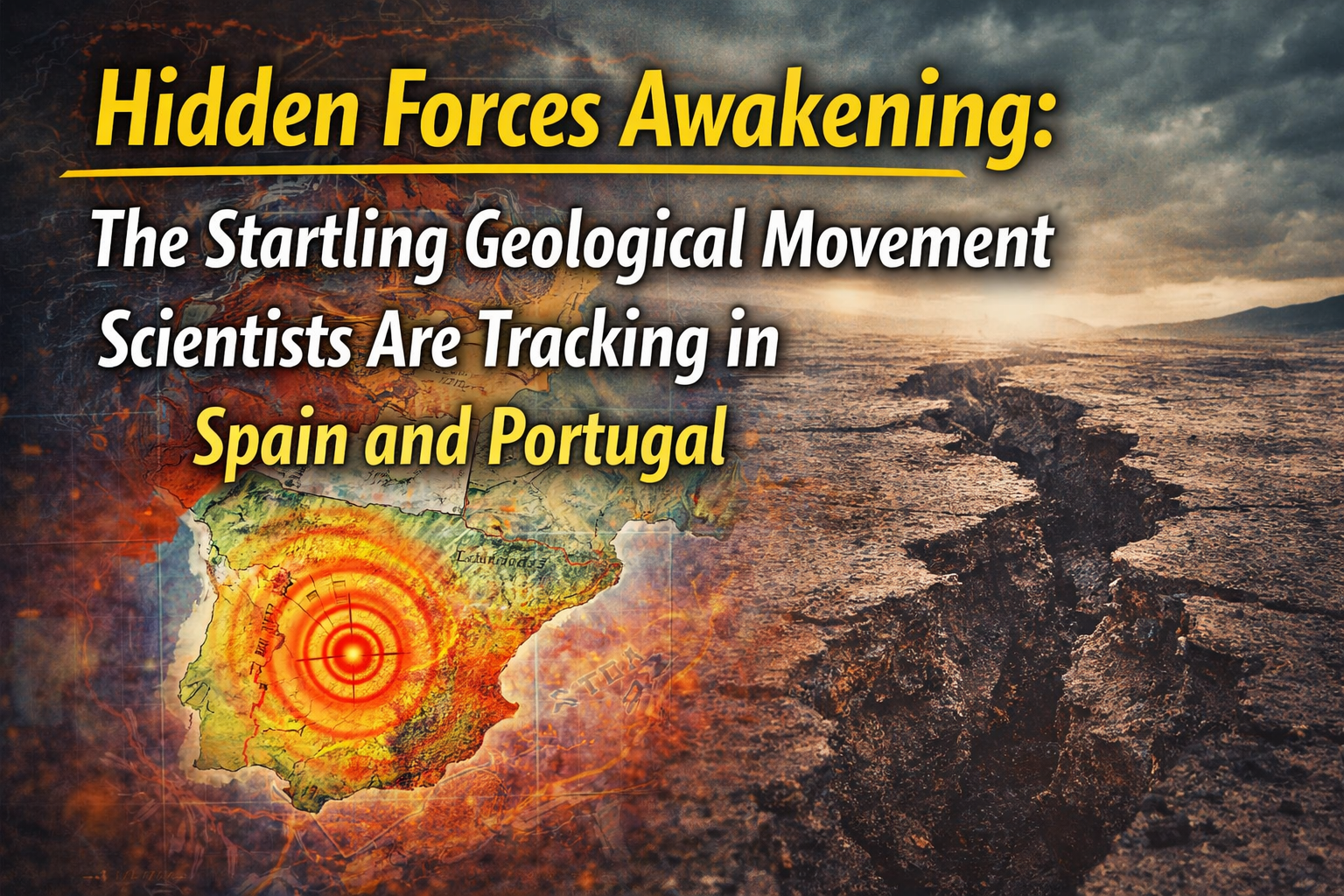
Hidden Forces Awakening: The Startling Geological Movement Scientists Are Tracking in Spain and Portugal: Across the Iberian Peninsula, scientists are closely monitoring an unusual geological development that has captured global attention. Reports of subtle but significant geological movements in parts of Spain and Portugal have sparked debates among geologists, environmental experts, and policymakers.

While the Earth’s crust is constantly shifting, recent observations suggest something more unusual may be unfolding beneath the surface of the region. From increased seismic activity to tectonic plate interactions, the changes occurring beneath the Iberian Peninsula could reshape how scientists understand the geological future of southwestern Europe.
Boater’s Paradise: The Jaw-Dropping Scotland Island Home With Two Deepwater Berths and Private Beach
This article explores the shocking geological shift happening in Spain and Portugal right now, the science behind it, what experts are saying, and what it could mean for the region in the years ahead.
Understanding the Geological Structure of the Iberian Peninsula
The Iberian Peninsula’s Complex Tectonic Environment
The Iberian Peninsula sits near the boundary between the Eurasian and African tectonic plates. These massive slabs of the Earth’s crust are constantly moving, though the movement is usually extremely slow.
Cosmic Mystery Unearthed: The Astonishing Bulgarian Rock That May Reveal Humanity’s First Star Map
Over millions of years, this tectonic interaction has shaped the landscapes of Spain and Portugal, creating mountain ranges, basins, and coastal formations. However, the region has historically been considered moderately stable compared to more active seismic zones such as the Pacific Ring of Fire.
Recent geological observations, however, suggest that the tectonic balance in this area may be evolving.
Historic Medical Breakthrough: China’s AI Robot Successfully Performs Autonomous Brain Surgery
A Region With a History of Powerful Earthquakes
Although the region is not considered highly active today, history reminds us that major seismic events have occurred here before.
One of the most devastating earthquakes in European history struck Lisbon in 1755. The disaster triggered massive destruction across Portugal and parts of Spain, followed by fires and a tsunami that caused widespread devastation.
Since then, scientists have continued to monitor the tectonic dynamics of the area to better understand future risks.
What Scientists Are Observing Right Now
Subtle Movements Beneath the Surface
Recent satellite measurements and geological studies have revealed subtle movements in the Earth’s crust beneath the Iberian Peninsula. These shifts are small but measurable and have sparked renewed interest among geologists.
Researchers using GPS-based monitoring systems have detected slight changes in the positioning of land masses, indicating slow tectonic motion occurring beneath Spain and Portugal.
Although such movement is not unusual in tectonic regions, scientists are examining whether these changes signal a larger geological transformation over time.
Mind-Control Breakthrough: The Astonishing Rise of Remote-Controlled ‘Cyborg Bees’ That Could Transform Science
Increasing Seismic Monitoring
In response to these findings, scientific institutions have increased monitoring efforts across the region. Seismographs, satellite observations, and ocean floor sensors are being used to gather more precise data about tectonic activity.
This monitoring helps researchers track patterns of micro-earthquakes and crustal deformation that may reveal how tectonic forces are evolving.

The goal is not only to understand current geological behavior but also to predict possible future developments.
The Role of the African and Eurasian Plates
A Slow but Powerful Collision
One of the main drivers behind the geological changes is the slow collision between the African Plate and the Eurasian Plate.
These tectonic plates move toward each other at a rate of a few millimeters per year. Although the movement seems insignificant, over long periods it can generate enormous geological pressure.
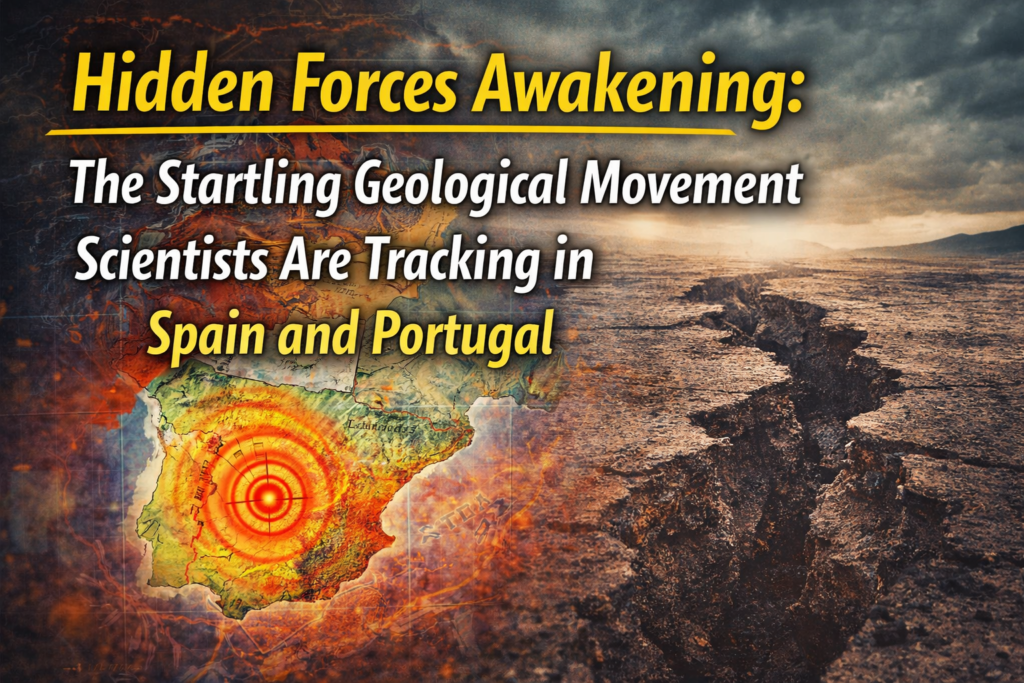
This pressure may lead to the formation of new fault systems, subtle crustal shifts, or occasional earthquakes.
Mind-Blowing Math Breakthrough: How American Teens Unlocked a Stunning New Proof of the Pythagorean Theorem
Possible Formation of New Geological Structures
Some scientists believe that long-term tectonic pressure could eventually create new geological features in the region. This could include gradual uplift of land areas, changes in fault systems, or shifts in stress zones beneath the crust.
However, these processes occur over thousands or even millions of years, meaning that any visible transformation would likely happen very slowly.
History-Shattering Discovery: The Astonishing Kenyan Find That Could Rewrite the Origins of Humanity
Could Spain and Portugal Face Increased Seismic Risk?
Experts Urge Careful Interpretation
While the recent geological observations are intriguing, experts caution against sensational conclusions.
Most researchers agree that the detected movements are part of natural tectonic processes. At this stage, there is no evidence suggesting an imminent geological disaster.
Vision Revolution or Risky Hype? The Shocking Truth Behind the Breakthrough Eye Gel Promising Sight Without Surgery
Instead, scientists view the findings as an opportunity to deepen understanding of the Iberian Peninsula’s tectonic environment.
Improved Earthquake Preparedness
Even though the region is relatively stable compared to major seismic zones, authorities continue to invest in earthquake preparedness and infrastructure resilience.
Hidden Power Revealed: The 60-Year-Old Diabetes Drug That Could Transform Brain Health
Modern building codes, early warning systems, and disaster response planning all play important roles in minimizing potential risks.
Technology Is Transforming Geological Research
Satellites Reveal Hidden Movements
One of the biggest breakthroughs in modern geology is satellite-based monitoring. Advanced Earth-observing satellites can detect tiny movements in the Earth’s crust, sometimes measuring shifts of only a few millimeters.
The Missing Millions: Italy’s Stunning €20M Asset Crackdown Linked to Ursula Andress
These technologies allow scientists to map tectonic behavior with unprecedented precision.
Ocean Floor Sensors Provide New Data
Because much of the tectonic activity occurs offshore in the Atlantic Ocean, researchers are also placing sensors on the ocean floor.
These instruments can detect underwater seismic activity and help scientists understand how tectonic forces operate beneath the seabed.
This data is crucial for building accurate geological models.
Climate and Geological Processes
Are Climate Changes Affecting Geological Activity?
Some researchers are also exploring whether climate-related factors could influence geological systems.
For example, changes in sea levels or variations in groundwater distribution can alter pressure on the Earth’s crust.
While these effects are generally small compared to tectonic forces, scientists are studying how they may interact with geological processes.
Interdisciplinary Research Is Expanding
Modern geological research increasingly combines multiple fields of science. Geologists, oceanographers, climate scientists, and geophysicists are working together to understand complex Earth systems.
This collaborative approach is helping scientists build more accurate predictions about geological changes.
The Importance of Public Awareness
Why Understanding Geology Matters
Geological processes may seem distant from everyday life, but they play a crucial role in shaping landscapes, infrastructure planning, and natural disaster preparedness.
Understanding how tectonic forces work helps governments and communities make informed decisions about urban development, energy infrastructure, and emergency planning.
Science Communication Is Key
Experts emphasize the importance of communicating scientific findings accurately. Sensational headlines can sometimes create unnecessary fear or confusion.
By providing clear explanations of geological processes, scientists hope to encourage public understanding rather than alarm.
What the Future Could Hold for the Iberian Peninsula
Continued Monitoring and Research
The geological changes being observed in Spain and Portugal are part of an ongoing scientific investigation.
Researchers will continue collecting data through satellite monitoring, seismic networks, and geological surveys to track how tectonic forces evolve over time.
Long-Term Geological Evolution
Earth’s geological processes operate on timescales far beyond human lifetimes. What appears dramatic today may ultimately represent a gradual shift occurring over thousands or millions of years.
Still, studying these processes provides valuable insight into how our planet continues to evolve.
Conclusion: A Geological Story Still Unfolding
The recent geological observations in Spain and Portugal highlight how dynamic the Earth’s crust truly is. Beneath the seemingly stable landscapes of the Iberian Peninsula, tectonic forces are constantly at work.
While the shifts currently being studied do not indicate immediate danger, they offer scientists an exciting opportunity to explore the complex interactions shaping the region.
With advanced technology, international collaboration, and continued monitoring, researchers are steadily uncovering the hidden forces that shape our planet.
The story of the Iberian Peninsula’s geological evolution is still being written—and the discoveries made today could deepen our understanding of Earth’s powerful and ever-changing systems.
FAQs
1. What geological shift is currently being observed in Spain and Portugal?
Scientists are studying subtle tectonic movements beneath the Iberian Peninsula, particularly around the boundary between the Eurasian Plate and the African Plate. Advanced monitoring systems have detected small changes in the Earth’s crust that indicate slow geological activity.
2. Is this geological shift dangerous for people living in the region?
At present, researchers say there is no evidence of an immediate danger. The movements being observed are part of natural tectonic processes that typically occur over very long periods.
3. Why are scientists paying attention to this shift now?
Modern technology, including satellites and GPS monitoring, allows scientists to detect extremely small crustal movements that were impossible to measure in the past. This new data has provided deeper insight into geological activity in the region.